
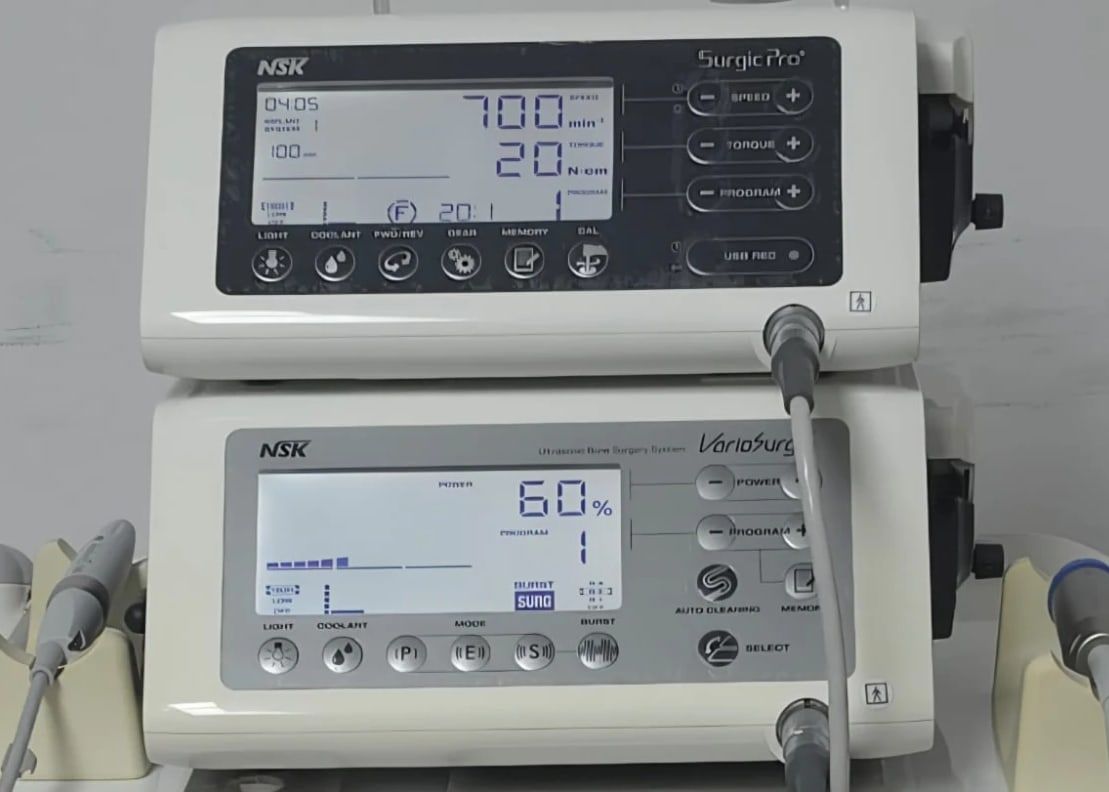
A dental implant is an artificial tooth root, usually made of titanium, placed in the upper or lower jawbone to support a crown, a bridge or a denture. It replaces a missing tooth without the need to grind down the neighbouring teeth. Treatment starts with a consultation and imaging, so we can check whether there is enough bone to place the implant.
What is a dental implant?
Implant treatment has three components:
- the implant, a small titanium screw that takes the place of the tooth root;
- the abutment, the piece screwed into the implant that connects it to the final restoration;
- the restoration, a crown, bridge or denture that looks and works like natural teeth.
After placement, the bone grows around the implant and bonds to its surface. This process, called osseointegration, generally takes 3 to 6 months, depending on the quality of the bone and where the implant is placed.
When do you need a dental implant?
An implant may be the right option if:
- you’re missing a single tooth and don’t want the neighbouring teeth ground down for a bridge;
- you’re missing several teeth side by side, which can be replaced with an implant-supported bridge;
- you’ve lost all the teeth in one jaw and want a fixed restoration or a more stable denture;
- your removable denture doesn’t fit well and bothers you.
To have an implant, you need enough bone, healthy gums and good general health. Uncontrolled diabetes, smoking, untreated gum disease and some medications can increase the risk of complications, so it’s important to tell your dentist about any health conditions and the medicines you take. If there isn’t enough bone, it can often be rebuilt with bone augmentation.
What are the stages of implant treatment?
- Consultation and planning. The dentist examines you and recommends imaging, usually a panoramic X-ray or a 3D scan, to assess the amount and quality of the bone.
- Preparation. Any decay and gum problems are treated first, followed by bone augmentation if needed.
- Placing the implant. Under local anaesthetic, the dentist opens the gum, prepares the bone and places the implant chosen during planning.
- Osseointegration. The implant fuses with the bone, usually over 3–6 months. If needed, you can wear a temporary restoration in the meantime.
- Fitting the abutment. If the gum has covered the implant, it is uncovered, and the abutment is attached.
- The final restoration. Impressions are taken, then the crown, bridge or denture is fitted as part of your crown, bridge or denture treatment.
- Check-ups. You come back regularly so we can check the implant, the gum and the restoration.
For more detail on each stage, read our article on dental implant steps and timeline.
Does getting an implant hurt?
The procedure is done under local anaesthetic, so you feel pressure but not pain. Afterwards, swelling and discomfort usually last a few days and can be managed with the pain relief and aftercare advice your dentist gives you: cold compresses, soft foods and no smoking. Call us if the bleeding doesn’t stop, if the swelling gets worse after the first few days, or if you develop a fever.
How do you look after an implant?
An implant can’t decay, but the gum and bone around it can become inflamed if plaque builds up. This condition, called peri-implantitis, can eventually lead to the loss of the implant. To prevent it:
- brush twice a day and clean around the implant every day with floss or interdental brushes;
- don’t smoke;
- come in for check-ups and a professional clean as often as recommended.
What to expect at euDent in Brașov
Dr. Eugen Sculea, the clinic’s founder, is a specialist in general dentistry with a competence in implantology and training in bone augmentation. Before any procedure, we explain all your options, from implants to bridges or dentures, so you can make an informed choice. We agree on the treatment plan and costs together, before we begin. If a tooth needs to be extracted before the implant, this is part of our oral surgery service.
Medically reviewed by Dr. Eugen Sculea