
A dental implant is an artificial tooth root, usually made of titanium, placed in the jawbone to hold a crown. Treatment generally has four stages: a consultation and treatment plan, placing the implant, healing (osseointegration, which typically takes 3–6 months) and the final crown or bridge. Overall it usually takes a few months, or longer if you need bone grafting.
When might you need a dental implant?
An implant is one of the ways to replace missing teeth. It can replace:
- a single tooth, with a crown on the implant;
- several teeth next to each other, with an implant-supported bridge;
- all the teeth in one jaw, as support for a fixed restoration or to stabilise a removable denture.
Unlike a conventional bridge, an implant doesn’t require the neighbouring teeth to be filed down. And because it passes chewing forces directly into the bone, it can help preserve the bone in that area. It isn’t the only option, though: a bridge or denture may suit some situations better. We go through them all at the consultation; read more on our crowns, bridges and dentures page.
Can anyone have an implant?
Most healthy adults can have an implant, but a few things matter:
- Your jaw has stopped growing. That’s why implants generally aren’t placed in children and teenagers.
- There is enough bone, or it can be rebuilt with bone grafting.
- Your gums are healthy. Active gum disease is treated first.
- General health conditions are under control, diabetes for example.
- Your dentist knows your medication. Some treatments, such as certain osteoporosis medicines or blood thinners, need careful planning, so mention everything you take.
- Smoking raises the risk of the implant failing to integrate and of problems later on.
What are the steps of implant treatment?
1. Consultation and treatment plan
Your dentist examines your mouth and recommends imaging, usually an X-ray and often a CBCT (3D) scan, to see how much bone you have and where the important structures around it lie. Based on this, we draw up your treatment plan together, and this is when you find out the cost, before any procedure.
2. Preparation, if needed
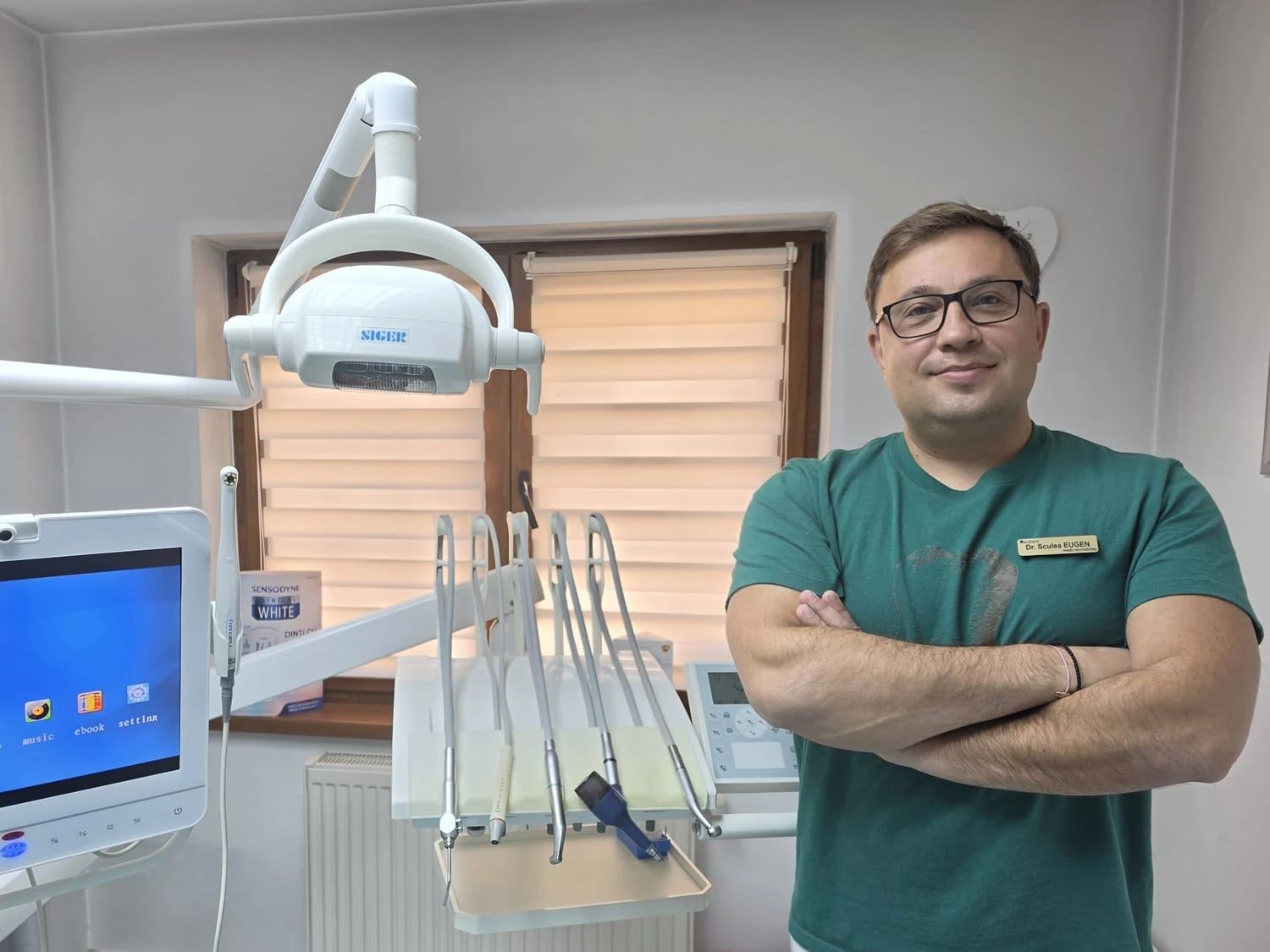
If the damaged tooth is still in place, it is removed. Sometimes the implant can be placed in the same session; at other times the area needs to heal first, usually for a few weeks or months. If there isn’t enough bone, bone grafting is done, which can add a few months to treatment. At euDent in Brașov, our founder, Dr. Eugen Sculea, is qualified in implantology and has trained in bone augmentation.
3. Placing the implant
The procedure is done under local anaesthetic. The dentist prepares the site in the bone, places the implant and closes the gum, usually with a few stitches. For a single implant it generally takes around an hour, longer if several implants are placed or bone grafting is done at the same time.
4. Osseointegration
This is the period in which bone grows around the implant and anchors it. It typically takes 3–6 months, depending on the quality of the bone and where in the mouth the implant is. In the meantime, a temporary solution is often possible, especially for front teeth.
5. The final restoration
If the implant was covered by the gum, it is uncovered with a small procedure. A healing cap is fitted, and the gum shapes itself around it, usually over a few weeks. Then come the impressions, the abutment and the final restoration made in the lab: a crown, a bridge or a denture. You can read more about how we work on our dental implants page.
How long does implant treatment take overall?
It depends a lot on your starting point. As a rough guide:
- consultation and imaging: one or two visits;
- implant placement: a single session;
- osseointegration: typically 3–6 months;
- final restoration: usually a few weeks.
In straightforward cases, the whole process generally takes a few months. If you need an extraction and healing time, or bone grafting, treatment can stretch to a year or more. We’ll give you an estimate for your case after the consultation.
Does getting an implant hurt?
During the procedure the area is numb, so you’ll usually feel only pressure and vibration, not pain. We focus on techniques that keep discomfort to a minimum and explain each step before we take it. Once the anaesthetic wears off, some soreness, swelling or even bruising is normal, especially in the first 2–3 days. It usually settles within about a week, and the painkillers your dentist recommends help in the meantime.
What should you do in the first few days after surgery?
- Use cold compresses on your cheek, with breaks, on the first day.
- Eat soft, lukewarm food and chew on the other side.
- Don’t smoke and avoid alcohol, as both slow healing.
- Don’t rinse vigorously on the first day; after that, follow the hygiene instructions you were given.
- Brush the rest of your teeth as usual, and gently around the surgical site.
- Take any medicines exactly as prescribed and come to your follow-up visits. Stitches, if they aren’t dissolvable, are usually removed after 7–14 days.
How do you look after an implant long term?
An implant can’t decay, but the gum and bone around it can become inflamed if plaque builds up. This is called peri-implantitis and, if left untreated, it can lead to bone loss around the implant. To keep it healthy:
- brush twice a day and clean between your teeth daily, with floss or interdental brushes;
- don’t smoke;
- come in for a check-up and a professional clean every six months, so we can check the implant and the gum around it.
When should you call the dentist straight away after an implant?
Call us if:
- bleeding doesn’t stop after 30–45 minutes of firm pressure with gauze;
- pain or swelling gets worse after the third day instead of better;
- you have a fever, a bad taste or see pus;
- numbness in your lip, chin or tongue doesn’t go away after the anaesthetic should have worn off;
- the implant or the temporary restoration feels loose.
We see emergencies every day from 09:00 to 21:00 without an appointment; please call first on 0747 353 415. If swelling spreads towards your eye or neck, or you find it hard to swallow or breathe, go to the emergency department or call 112.
Frequently asked questions
How much does a dental implant cost?
It depends on your situation: how many implants you need, the condition of the bone, whether bone grafting is required and the type of final restoration. You'll know the cost after the consultation, when you receive your treatment plan, before we start.
How long until I have my final tooth on the implant?
Usually a few months. Healing (osseointegration) typically takes 3–6 months, plus a few weeks for the final crown or bridge. If you need an extraction or bone grafting first, treatment can take longer, sometimes a year or more.
Will I have a gap while the implant heals?
Not necessarily. A temporary solution is often possible, especially for front teeth. Your dentist will go through the options that suit your case at the consultation.
How long does a dental implant last?
A well-integrated implant can work for many years, but how long it lasts depends on your oral hygiene, smoking, general health and regular check-ups. Careful brushing and six-monthly visits are the best protection.
The information in this article is general and does not replace a consultation with a dentist. For a diagnosis and a treatment plan that suits you, book a consultation.