
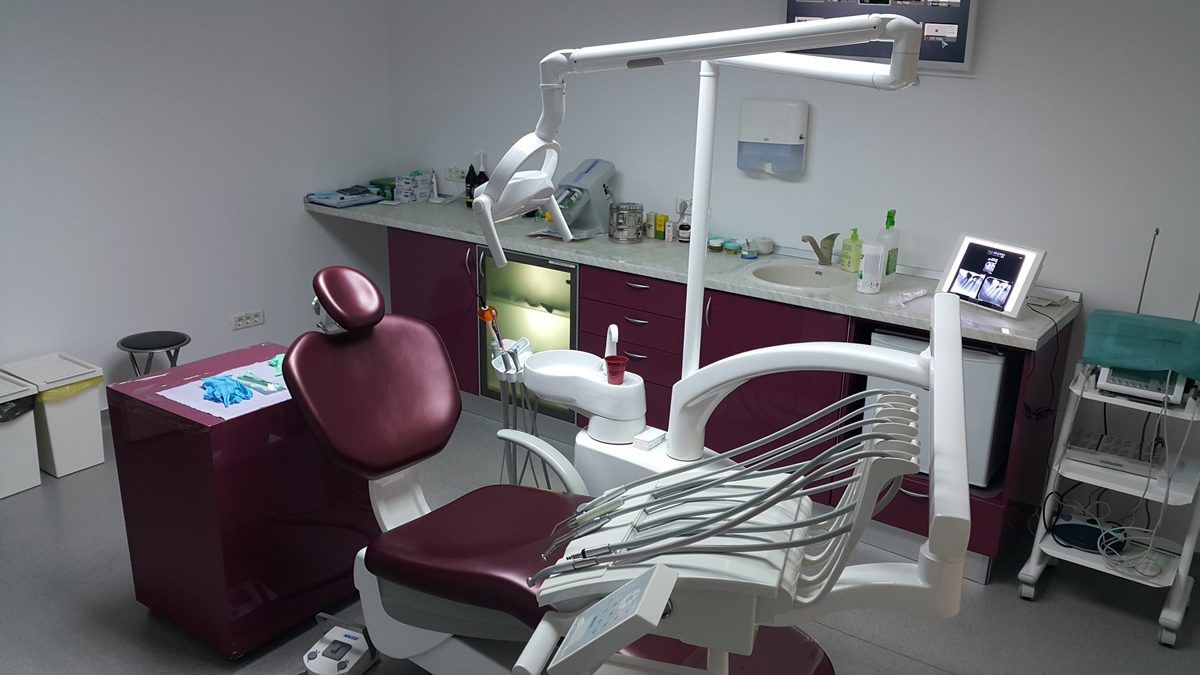
A dental filling repairs a tooth damaged by decay or a small chip. The dentist removes the decayed tissue, cleans the cavity and fills it with a tooth-coloured material that is hardened with a special light. If a tooth is sensitive to sweet or cold things, or you notice a dark spot on it, book a check-up: decay caught early is simpler to treat.
What is a dental filling?
Tooth decay starts when bacteria in plaque turn sugars into acids. Those acids dissolve minerals from the enamel and then from the dentine underneath, until the tissue softens and a cavity forms. Decay doesn’t heal on its own: once a cavity has formed, it keeps moving deeper into the tooth.
A filling stops that process. The dentist removes the damaged tissue and rebuilds the tooth’s shape, function and appearance with a restorative material.
How do I know if I need a filling?
Small cavities usually don’t hurt, which is why many are only found at a routine six-month check-up. Signs worth having checked:
- brief sensitivity to sweet, cold or hot food and drinks;
- a brown or black spot, or a chalky white patch, on a tooth;
- a hole or rough edge you can feel with your tongue;
- food that keeps getting stuck between the same two teeth;
- an old filling that is cracked, has fallen out or has dark edges;
- a chipped corner of a tooth.
If the pain starts on its own, throbs or wakes you up at night, the decay may already have reached the nerve. You may then need root canal treatment, so don’t put off your visit.
How is a filling done, step by step?
- Examination. The dentist checks the tooth and, if needed, recommends an X-ray to see how deep the decay goes.
- Local anaesthetic. For deeper cavities, we numb the area so you don’t feel pain.
- Removing the decay. All the affected tooth tissue is cleaned away.
- Preparing the cavity. The tooth is kept dry and a bonding agent is applied to the walls of the cavity.
- Filling. The material is placed in layers, and each layer is hardened with a blue curing light.
- Finishing. The dentist shapes and polishes the filling, then checks your bite so nothing feels high when you close your mouth.
For a typical cavity, the appointment generally takes 30 to 60 minutes.
What are fillings made of?
Most fillings today are made of light-cured composite resin, a tooth-coloured material that bonds to the tooth and can be matched to its shade, so the filling is hard to spot. In some cases, such as baby teeth or areas close to the gum line, the dentist may choose a glass ionomer material, which releases fluoride.
When a tooth has lost a lot of its structure, a filling may no longer be enough, and you may need a crown instead. We explain from the start which option suits your tooth.
How long does a filling last, and how do I look after it?
A filling can last many years, but its lifespan depends on several factors:
- your daily oral hygiene;
- coffee, tea, red wine and smoking, which can stain the edges of the filling;
- knocks and injuries to the teeth;
- bruxism, meaning grinding or clenching your teeth;
- the size of the filling and the quality of the materials used.
To make it last, brush twice a day with a fluoride toothpaste, floss every day and come in for a check-up and professional clean every six months. Mild sensitivity for the first few days is normal. If it persists, gets worse, or the tooth seems to hit first when you bite, come back so we can check it.
What to expect at euDent in Brașov
Every treatment starts with a consultation. We explain what we found and what your options are, then agree on a treatment plan together, including costs, before we begin. We use techniques and equipment designed to minimise discomfort, and we take our time with nervous patients. We treat adults and children alike; for younger patients, see our children’s dentistry page.
Medically reviewed by Dr. Eugen Sculea