
Children’s dentistry focuses on baby teeth and young permanent teeth, from the very first get-to-know-you visit to treating decay and preventing it. At euDent in Brașov, we treat children with patience and explain everything in words they understand, so that going to the dentist stays a good memory rather than a source of fear.
When should a child first see the dentist?
A first visit is generally recommended once the first teeth have appeared, around the age of one. Ideally, this first meeting isn’t linked to toothache: your child comes in, meets the dentist, sits in the chair and goes home with a pleasant experience. After that, a check-up every 6 months helps catch problems early. You’ll find more tips in our article on your child’s first dental visit.
What does a first visit without fear look like?
The first visit is, above all, a chance to get to know each other:
- Getting acquainted. Your child explores the room, the chair that goes up and down, the light and the little mirror.
- Explaining in their words. We show the instruments and say what we’re about to do before we use them.
- Going at their pace. We take breaks when needed and don’t rush.
- A parent close by. Having you there helps your child feel safe.
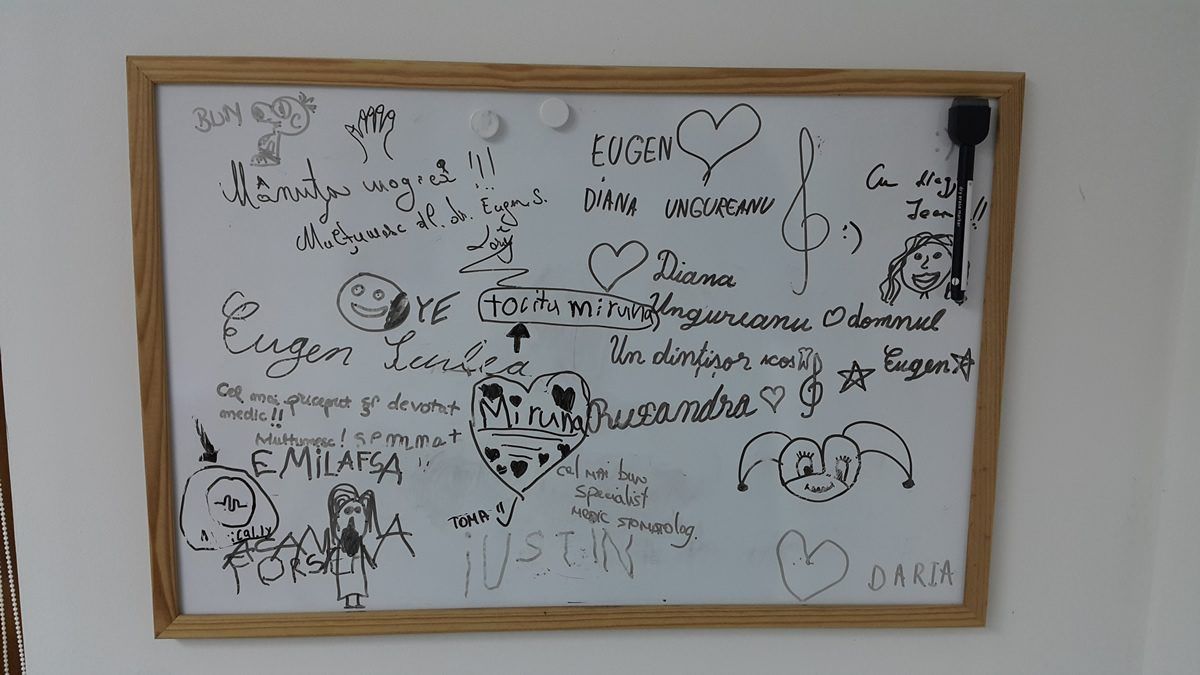
At the end, young patients can leave a message on the board in our clinic, a simple way to go home with a happy memory. Dr. Larisa Gligor treats both adults and children with the same patience and care.
At home, talk about the dentist in a relaxed, matter-of-fact way and avoid using the visit as a threat. Choose a time of day when your child is well rested.
What treatments do we offer for children?
- regular check-ups and brushing lessons for both child and parent;
- dental sealants on permanent teeth, to protect the grooves of the molars;
- treatment of decay in baby teeth and young permanent teeth, using fillings with materials suited to the child’s age;
- pulp (root canal) treatment in baby teeth, with materials that resorb naturally along with the tooth’s root;
- treatment of gum inflammation.
If we notice problems with tooth alignment or jaw growth, we’ll recommend an orthodontic assessment.
Why do baby teeth matter?
Baby teeth help your child chew and speak properly, and they hold space for the permanent teeth. Their enamel is thinner, so decay can progress faster than in an adult. Left untreated, it can cause pain and infection and can affect the permanent tooth developing underneath.
When should you take your child to the dentist urgently?
Call us as soon as possible if a tooth has broken or been knocked out after a fall or blow, if there is swelling of the face or gums, or if toothache comes with a fever. Dental emergencies are seen every day from 09:00 to 21:00 without an appointment; just phone 0747 353 415 first.
How can you look after your child’s teeth at home?
- Brush their teeth twice a day from the first tooth onwards, with a fluoride toothpaste: a smear the size of a grain of rice up to age 3, and a pea-sized amount after that.
- Help with or supervise brushing until around the age of 7–8.
- Limit sugary snacks and drinks between meals.
- Don’t let your child fall asleep with a bottle of milk or juice.
- Book a check-up every 6 months.
Medically reviewed by Dr. Eugen Sculea